



































































































































































How Polycystic Kidney Disease Is Diagnosed: Tests, Treatment, and What to Expect
Author: RVLNSV PRASAD
Updated On: September 2026
About Us
Author Bio
Editorial Policy
Contact Us

Introduction
Finding out that you may have polycystic kidney disease (PKD) can raise many questions, especially if you have a family history of the condition or a scan has unexpectedly shown kidney cysts. One of the first questions people ask is how polycystic kidney disease is diagnosed and whether an ultrasound, blood test, MRI, CT scan, or genetic test is enough to confirm it.
The answer is more nuanced than simply finding a cyst on a kidney scan. Doctors usually consider several pieces of information together, including your age, symptoms, family history, kidney imaging, kidney function, and, when appropriate, genetic testing. For people with suspected autosomal dominant polycystic kidney disease (ADPKD), imaging is particularly important because the number and pattern of kidney cysts can help distinguish inherited PKD from other causes of kidney cysts. NIDDK: Autosomal Dominant Polycystic Kidney Disease
Another important distinction is between PKD and simple kidney cysts. Simple cysts are common, especially as people get older, and usually do not mean that someone has an inherited kidney disease. PKD is different because it is a genetic disorder in which multiple cysts can develop and enlarge over time, potentially affecting kidney function and other organs. NIDDK: Simple Kidney Cysts
This guide explains what doctors look for when diagnosing PKD, what each diagnostic test can and cannot tell you, when genetic testing may be useful, and what typically happens after a diagnosis. It also explains treatment and monitoring options, including current recommendations for selected people with ADPKD who may benefit from disease-modifying therapy.
The goal is not to help you diagnose yourself from an ultrasound report or a list of symptoms. Instead, it is to help you understand what the diagnostic process involves, why different tests may be ordered, and what questions you can discuss with your healthcare professional.
Quick Answer
Polycystic kidney disease (PKD) is usually diagnosed by combining a person’s medical history, family history, imaging tests, and, in selected situations, genetic testing. For autosomal dominant polycystic kidney disease (ADPKD), ultrasound is commonly used to look for kidney cysts, while CT or MRI may provide additional information when the diagnosis is uncertain or more detailed imaging is needed. NIDDK: Autosomal Dominant Polycystic Kidney Disease Diagnosis
Blood and urine tests are also important, but they serve a different purpose. They help doctors evaluate kidney function and complications rather than confirming PKD by themselves. Genetic testing can be particularly useful when imaging does not provide a clear answer, when the family history is uncertain, or when knowing the genetic diagnosis could affect family planning or evaluation of relatives. KDIGO 2025 ADPKD Guideline
The important point is that finding a kidney cyst does not automatically mean you have PKD. Simple kidney cysts are common, particularly with increasing age, and are different from the inherited cystic disease seen in PKD. NIDDK: Simple Kidney Cysts
Key Takeaways
- PKD is a genetic condition in which numerous fluid-filled cysts develop in the kidneys.
- ADPKD is the most common form and is usually diagnosed later in childhood or adulthood.
- Doctors consider age, symptoms, family history, number and appearance of kidney cysts, and imaging findings when diagnosing ADPKD.
- Ultrasound is an important first-line imaging test, while CT or MRI may be used when more information is needed.
- Genetic testing is not necessary for every person with suspected PKD.
- Blood tests such as creatinine and estimated glomerular filtration rate (eGFR) help determine how well the kidneys are functioning.
- Urine testing can identify blood, protein, infection, or other abnormalities that may accompany kidney disease.
- Simple kidney cysts are not the same as PKD.
- Treatment focuses on controlling complications, protecting kidney function, and slowing progression in people at appropriate risk.
- The 2025 KDIGO guideline provides updated recommendations for evaluating and treating ADPKD. KDIGO 2025 ADPKD Guideline
What Is Polycystic Kidney Disease?
Polycystic kidney disease is an inherited disorder that causes multiple fluid-filled cysts to develop in the kidneys. As cysts grow and multiply, they can change the size and structure of the kidneys and eventually interfere with kidney function. PKD can also affect organs outside the kidneys, including the liver and blood vessels. NIDDK: What Is Polycystic Kidney Disease?
PKD is not the same as having one or two ordinary kidney cysts discovered incidentally on a scan. Simple kidney cysts are usually harmless and generally do not impair kidney function, whereas PKD is a genetic disease that can progressively affect the kidneys. National Kidney Foundation: Simple Kidney Cysts
There are two major inherited forms.
Autosomal Dominant Polycystic Kidney Disease
Autosomal dominant polycystic kidney disease (ADPKD) is the more common form. It can remain unnoticed for years, and many people are diagnosed during adulthood.
ADPKD is associated with mutations in genes such as PKD1 and PKD2, although other genetic causes of cystic kidney disease also exist. The severity and rate of progression can vary considerably between individuals. NIDDK: Autosomal Dominant PKD
Autosomal Recessive Polycystic Kidney Disease
Autosomal recessive polycystic kidney disease (ARPKD) is much less common and often becomes apparent before birth, during infancy, or in childhood. Ultrasound may show enlarged kidneys and abnormalities involving the liver. NIDDK: Autosomal Recessive PKD
Because ADPKD and ARPKD differ in inheritance, age of presentation, and clinical features, the diagnostic approach must be tailored to the individual.
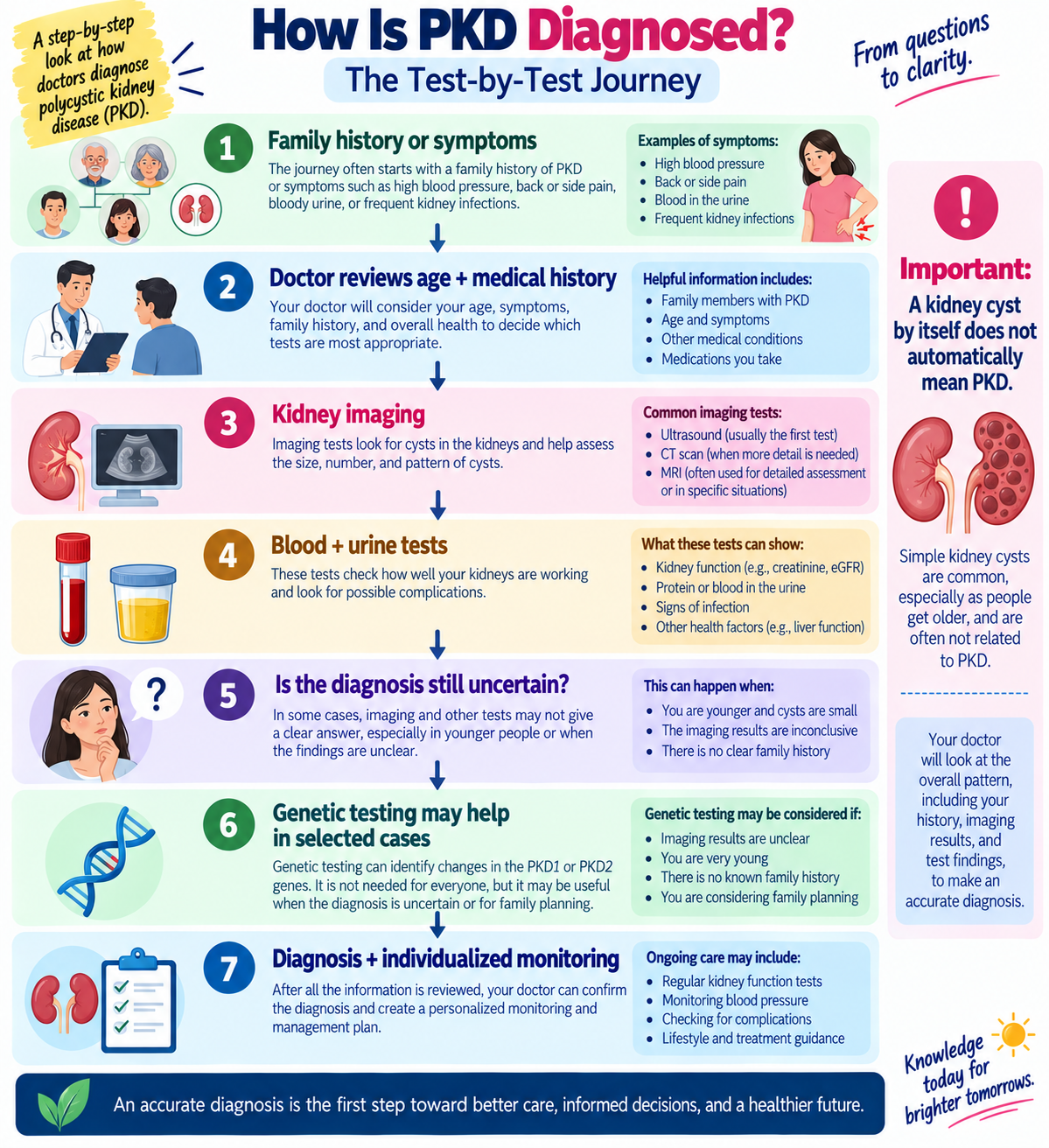
How Is Polycystic Kidney Disease Diagnosed?
There is no single test that confirms every case of PKD.
Instead, doctors put several pieces of information together. This can include:
- Personal and medical history
- Family history
- Physical examination
- Kidney imaging
- Blood and urine tests
- Genetic testing when appropriate
For ADPKD, NIDDK states that diagnosis can involve imaging or genetic testing together with factors such as age, family history, and the number of cysts present. NIDDK: How ADPKD Is Diagnosed
1. Medical and Symptom History
Your doctor may first ask about symptoms and previous medical problems.
Depending on the individual, the discussion may include:
- High blood pressure
- Blood in the urine
- Repeated urinary tract infections
- Kidney stones
- Back, abdominal, or side pain
- Headaches or neurological symptoms
- Previous imaging results
- Known kidney problems
- Liver cysts or other related findings
- The age at which relatives developed kidney disease
Symptoms alone cannot establish PKD. Some people with ADPKD have few or no symptoms when cysts are first discovered.
That is why your medical history becomes much more useful when combined with imaging and family history.
2. Family History
Family history can be one of the most important clues.
If a parent or close relative has confirmed ADPKD, doctors may consider whether other family members should be evaluated.
However, not having a known family history does not automatically rule out ADPKD. Some people have a new genetic change, an unrecognized family history, or another genetic form of cystic kidney disease. KDIGO 2025 ADPKD Guideline
This is one reason a doctor should interpret imaging findings rather than relying on family history alone.
Diagnostic Tests for Polycystic Kidney Disease
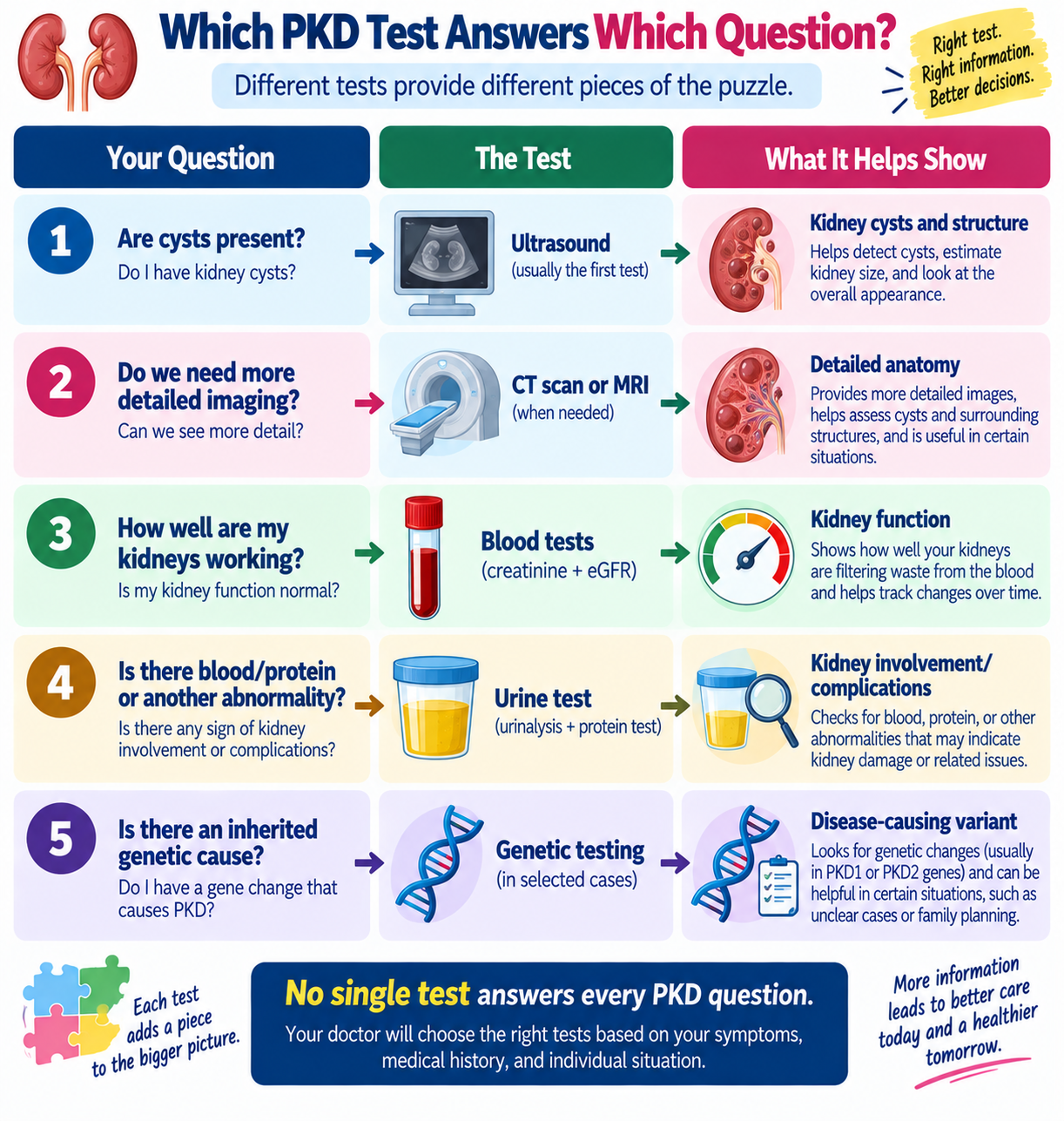
The choice of test depends on age, symptoms, family history, previous results, kidney function, and the question the doctor is trying to answer.
| Test | What it can show | Main purpose |
|---|---|---|
| Kidney ultrasound | Kidney cysts, kidney size, and structure | Common initial imaging test |
| CT scan | Detailed kidney anatomy and complications | More detailed structural assessment |
| MRI | Cysts, kidney structure, and kidney volume | Detailed imaging and disease assessment |
| Blood tests | Creatinine, eGFR, and other markers | Assess kidney function. |
| Urine tests | Blood, protein, and other abnormalities | Assess kidney involvement/complications. |
| Genetic testing | Disease-causing genetic variants | Clarify selected uncertain or inherited cases. |
The 2025 KDIGO guideline specifically addresses modern approaches to ADPKD diagnosis, prognosis, treatment, and extrarenal complications. KDIGO 2025 ADPKD Guideline
Kidney Ultrasound
Ultrasound is an important test for suspected ADPKD because it can identify kidney cysts without exposing the patient to ionizing radiation.
It is particularly useful when a person has a known family history and the clinician is looking for the characteristic pattern of cysts.
However, ultrasound is not perfect in every situation. A negative or inconclusive ultrasound does not necessarily settle the question in a younger person or someone whose family history and clinical situation make the diagnosis important.
Doctors therefore interpret the number and distribution of cysts together with the person’s age and family history. NIDDK: ADPKD Diagnosis
CT Scan
Computed tomography (CT) can provide more detailed images of the kidneys and surrounding structures.
A CT scan may be considered when the doctor needs additional anatomical information, when ultrasound findings are unclear, or when investigating another possible cause of symptoms.
Whether contrast is appropriate depends on the specific clinical situation, the type of scan being performed, kidney function, and other individual factors. Therefore, it is not accurate to say that everyone with suspected PKD needs a contrast CT.
MRI Scan
Magnetic resonance imaging (MRI) can provide detailed images without the ionizing radiation used by CT.
MRI can be particularly valuable when doctors need detailed information about kidney structure or kidney volume. Kidney size and total kidney volume can also help clinicians assess disease severity and progression risk in appropriate patients with ADPKD.
The KDIGO 2025 guideline includes kidney imaging and prognostic assessment as important components of modern ADPKD care. KDIGO 2025 ADPKD Guideline
Blood Tests
Blood tests do not simply answer the question, “Do I have PKD?”
Instead, they help determine how well the kidneys are working and whether complications are developing.
Common measurements may include:
- Serum creatinine
- Estimated glomerular filtration rate (eGFR)
- Electrolytes
- Other blood measurements based on the person’s condition and treatment
A person can have PKD while kidney function is still relatively preserved. Therefore, a normal-looking kidney function result does not automatically exclude early PKD.
Conversely, abnormal kidney function does not prove PKD because many different diseases can reduce kidney function.
Urine Tests
A urine test can provide additional information about kidney health. Depending on the situation, it may detect:
- Blood in the urine
- Protein or albumin
- Signs of infection
- Other abnormalities that may need further evaluation
These findings can help doctors assess kidney involvement or identify complications. However, urine testing alone usually cannot confirm autosomal dominant polycystic kidney disease (ADPKD).
When Is Genetic Testing Used for PKD?
Genetic testing can identify disease-causing genetic variants associated with inherited kidney disorders.
It can be especially useful when:
- Imaging findings are uncertain.
- The family history is unclear.
- A person is young, and the diagnosis cannot be established confidently with imaging.
- The exact inherited condition needs clarification.
- A potential kidney donor needs careful evaluation.
- Genetic information may affect family planning.
- A particular inherited cystic kidney disease is suspected.
NIDDK confirms that healthcare professionals may use genetic testing along with imaging, age, family history, and cyst numbers when diagnosing ADPKD. NIDDK: Autosomal Dominant PKD
Genetic testing also has limitations. A negative result does not always exclude every form of inherited cystic kidney disease, and interpretation may require specialist input.
For this reason, genetic testing should generally be ordered and interpreted in the context of the individual’s clinical situation.
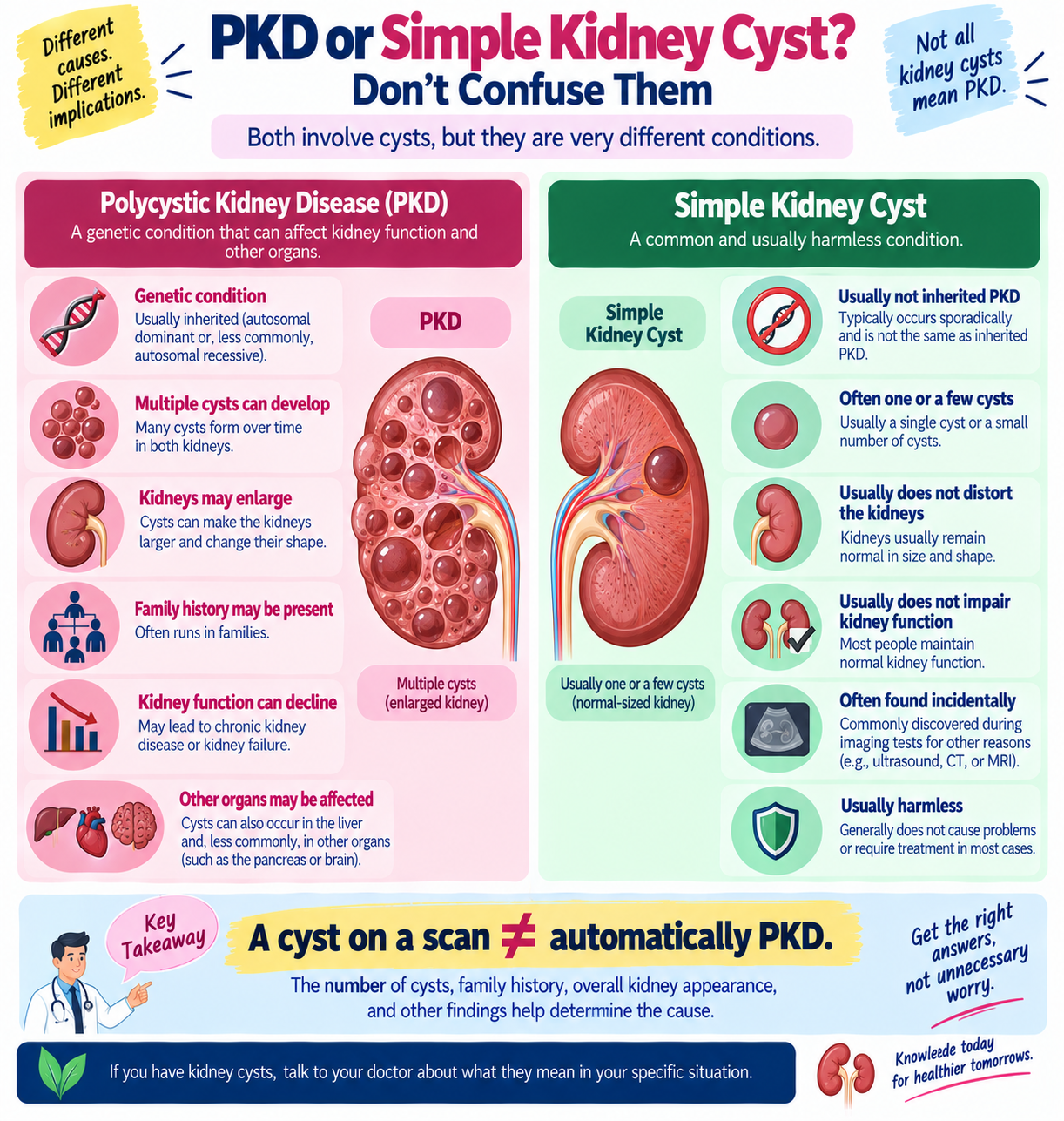
PKD vs. Simple Kidney Cysts
This distinction is extremely important because a cyst found on a kidney scan does not automatically mean PKD.
Simple kidney cysts can occur in otherwise healthy people and become more common with age. They are usually harmless and often do not require treatment. NIDDK: Simple Kidney Cysts
| Feature | Polycystic Kidney Disease | Simple Kidney Cysts |
|---|---|---|
| Genetic condition | Usually inherited | Usually not an inherited PKD disorder |
| Number of cysts | Often numerous | May be one or several |
| Kidney structure | Can enlarge and become distorted | Usually remains normal |
| Family history | Maybe present | Usually not characteristic |
| Kidney function | Can progressively decline | Usually preserved |
| Other organs | Liver and other complications can occur. | Usually limited to the cyst itself |
| Long-term monitoring | Often important | Often unnecessary unless complications occur |
The NIDDK specifically distinguishes PKD from simple kidney cysts because the two conditions have very different implications. NIDDK: What Is PKD?
This is also why an ultrasound report saying “renal cyst” should not automatically be interpreted as “polycystic kidney disease.”
What Happens After a PKD Diagnosis?
Receiving a PKD diagnosis does not necessarily mean that kidney failure is imminent.
The disease can progress at very different rates between individuals. Doctors therefore look at kidney function, age, imaging findings, blood pressure, symptoms, family history, and other factors to understand an individual’s risk.
The 2025 KDIGO guideline emphasizes individualized evaluation and risk assessment rather than treating every person with ADPKD in exactly the same way. KDIGO 2025 ADPKD Guideline
After diagnosis, your healthcare team may monitor:
- Blood pressure
- Serum creatinine and eGFR
- Urine findings
- Kidney size or imaging findings when appropriate
- Symptoms and complications
- Cardiovascular risk
- Liver and other extrarenal manifestations
- Risk of faster kidney-function decline
A nephrologist may become particularly important when kidney function is declining, complications are developing, or disease-modifying treatment is being considered.
Treatment for Polycystic Kidney Disease
There is currently no universal cure that removes the inherited cause of PKD.
Treatment is aimed at protecting kidney function, controlling complications, slowing progression when appropriate, and maintaining quality of life.
Control Blood Pressure
High blood pressure is an important complication of ADPKD and can contribute to further kidney damage.
Treatment may include lifestyle changes and prescription blood-pressure medicines. ACE inhibitors and angiotensin receptor blockers (ARBs) are commonly used when clinically appropriate. NIDDK: Autosomal Dominant PKD
Your target blood pressure should be individualized rather than copied from someone else’s treatment plan.
Tolvaptan for Selected People With ADPKD
One of the most important advances in ADPKD treatment is tolvaptan, a vasopressin V2-receptor antagonist that can slow kidney-function decline in selected adults with ADPKD who are at higher risk of rapid progression.
The 2025 KDIGO guideline recommends individualized decision-making when considering tolvaptan and notes that its benefit is greatest in appropriately selected people with rapidly progressive disease. KDIGO 2025 ADPKD Guideline
Tolvaptan is not appropriate for everyone with PKD.
It can also cause increased urination and thirst because of its aquaretic effect. Liver safety monitoring is required because of the risk of drug-induced liver injury. KDIGO describes liver-function monitoring as an essential part of treatment. KDIGO 2025 ADPKD Guideline
This is why patients should not decide to start, stop, or change tolvaptan without medical supervision.
Managing Pain and Other Complications
Pain can occur for several reasons in ADPKD, including cyst growth, bleeding into a cyst, infection, kidney stones, urinary tract infection, or stretching of tissues around enlarged kidneys. NIDDK: Autosomal Dominant PKD
The appropriate treatment depends on the cause.
Persistent, severe, or unexplained pain deserves medical assessment rather than repeated self-treatment.
Kidney Failure Treatment
Some people with progressive ADPKD eventually develop kidney failure.
When kidney function reaches advanced stages, treatment options can include dialysis or kidney transplantation.
Kidney replacement therapy is not inevitable for every person diagnosed with PKD, and the timing varies substantially between individuals. NIDDK: Autosomal Dominant PKD
Daily Habits That Support Kidney Health
Lifestyle changes do not eliminate the genetic cause of PKD, but they can support overall kidney and cardiovascular health.
Follow a Kidney-Friendly Eating Pattern
A healthy eating plan may help with blood pressure control.
People with PKD may be advised to reduce sodium intake, while the appropriate amounts of protein, potassium, phosphorus, and other nutrients can change depending on kidney function and medications. NIDDK: Eating, Diet & Nutrition for PKD
There is no single “PKD diet” that is appropriate for everyone.
If kidney function is reduced, a renal dietitian can help tailor the eating plan.
Stay Adequately Hydrated Fluid recommendations should be individualized.
NIDDK notes that staying adequately hydrated may help slow progression toward kidney failure in PKD, but people should discuss their appropriate fluid intake with their healthcare professional rather than forcing excessive amounts of water. NIDDK: What Is PKD?
More water is not automatically better, particularly for people with advanced kidney disease or other medical conditions affecting fluid balance.
Stay Physically Active
Regular physical activity can support cardiovascular health, weight management, stress reduction, and blood pressure control.
However, people with very enlarged kidneys or certain complications may need individualized advice about high-impact or contact activities. NIDDK specifically advises discussing contact sports with a healthcare provider in people with PKD. NIDDK: What Is PKD?
Avoid Smoking
Smoking can worsen cardiovascular risk and is particularly undesirable in people with kidney disease.
Stopping smoking is one of the practical lifestyle changes that can support overall health in people living with PKD. NIDDK: What Is PKD?
What Many People Do Not Realize About PKD Diagnosis
A normal kidney-function test does not rule out early PKD.
Kidney function can remain relatively preserved while cysts are already present.
That is why imaging can be important when someone has a strong family history or other reasons to suspect ADPKD.
One cyst does not equal PKD.
Simple kidney cysts are common and generally have a different significance from inherited PKD. National Kidney Foundation: Simple Kidney Cysts
Family history matters, but it is not the whole diagnosis.
A known affected parent can substantially raise suspicion, but doctors still need to interpret imaging and other findings.
Conversely, someone without an obvious family history can still have a genetic cystic kidney disorder.
Diagnosis and prognosis are different questions.
Confirming that someone has ADPKD is not the same as determining how quickly their disease will progress.
Doctors may use additional clinical and imaging information to assess progression risk and determine whether disease-modifying treatment should be considered.
The KDIGO 2025 guideline separates diagnosis from prognosis and treatment decisions, reinforcing the importance of individualized assessment. KDIGO 2025 ADPKD Guideline
Questions to Ask Your Doctor After a PKD Diagnosis
Consider asking:
- Which type of PKD do I have?
- What did my ultrasound, CT, or MRI show?
- How is my kidney function?
- What is my current eGFR?
- Do I need genetic testing?
- Should my close relatives be evaluated?
- How often should my blood pressure be checked?
- How often should I have kidney-function tests?
- Am I considered at high risk for rapid progression?
- Would tolvaptan be appropriate for me?
- What side effects and monitoring would treatment involve?
- Should I change my diet or fluid intake?
- Which pain medicines are safest for me?
- Are there activities I should avoid?
- When should I see a nephrologist?
Writing these questions down before an appointment can make a complicated diagnosis easier to discuss.
When Should You Seek Medical Attention?
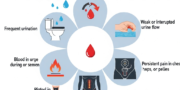
People with known or suspected PKD should contact a healthcare professional for symptoms that could indicate a complication, such as:
- Severe or persistent flank or abdominal pain
- Blood in the urine
- Fever with urinary or kidney pain
- Symptoms of a possible urinary tract infection
- Significant changes in urination
- New or poorly controlled high blood pressure
- Severe headache or neurological symptoms
Sudden severe neurological symptoms, such as weakness, difficulty speaking, loss of consciousness, or a sudden severe headache, require urgent emergency medical evaluation rather than waiting for a routine PKD appointment.
PKD can be associated with complications involving blood vessels as well as the kidneys, so unusual or severe symptoms should be evaluated promptly. NIDDK: What Is Polycystic Kidney Disease?
Common Mistakes to Avoid After a PKD Diagnosis
Mistake 1: Assuming every kidney cyst means PKD
Simple kidney cysts are common and are not equivalent to inherited PKD.
Mistake 2: Waiting for symptoms before evaluation
ADPKD may cause few symptoms during its earlier stages. People at increased genetic risk should discuss appropriate testing with a healthcare professional. NIDDK: ADPKD Diagnosis
Mistake 3: Treating blood pressure as a minor issue
Blood-pressure control is an important part of protecting kidney health in ADPKD.
Mistake 4: Taking supplements without checking first
“Natural” does not automatically mean kidney-safe. Some supplements and over-the-counter medicines can interact with prescribed treatments or create problems for people with impaired kidney function.
Discuss supplements and nonprescription medicines with a healthcare professional or pharmacist.
Mistake 5: Drinking excessive amounts of water
Adequate hydration may be helpful, but forcing extreme amounts of water is not a universal PKD treatment.
Your fluid needs should be individualized.
Mistake 6: Assuming tolvaptan is necessary for everyone
Tolvaptan is a treatment for selected people with ADPKD who meet appropriate criteria. It requires medical assessment and ongoing monitoring. KDIGO 2025 ADPKD Guideline
Quick Comparison: Which PKD Test Does What?
| Test | The main question helps answer |
|---|---|
| Ultrasound | Are kidney cysts present, and what do the kidneys look like? |
| CT | Is there more detailed structural information or a complication to investigate? |
| MRI | What does detailed kidney structure or kidney volume show? |
| Creatinine/eGFR | How well are the kidneys filtering? |
| Urine testing | Is there blood, protein, infection, or another abnormality? |
| Genetic testing | Is there evidence of a disease-causing inherited variant? |
| Blood pressure measurement | Is hypertension present and controlled? |
The most appropriate combination depends on the patient’s age, family history, clinical findings, and the specific diagnostic question. NIDDK: ADPKD Diagnosis
Frequently Asked Questions
Is there a cure for polycystic kidney disease?
There is currently no cure that removes the underlying genetic cause of PKD. Treatment focuses on controlling complications, protecting kidney function, and, in selected people with ADPKD, slowing disease progression.
Can an ultrasound detect polycystic kidney disease?
Ultrasound can identify kidney cysts and is an important diagnostic tool for ADPKD. However, the findings must be interpreted according to factors such as age and family history, and ultrasound may not answer every diagnostic question. NIDDK: ADPKD Diagnosis
Can you have PKD without symptoms?
Yes. ADPKD can remain unnoticed for years, and some people have few symptoms when the disease is first detected. NIDDK: What Is PKD?
Does a kidney cyst mean I have PKD?
No. Simple kidney cysts are common and usually harmless. PKD involves an inherited disease process with characteristic patterns of cyst development and other clinical features. National Kidney Foundation: Simple Kidney Cysts
When should genetic testing for PKD be considered?
Genetic testing may be useful when imaging is inconclusive, family history is uncertain, a particular inherited disorder is suspected, or genetic information would affect medical or reproductive decisions. KDIGO 2025 ADPKD Guideline
Can blood tests diagnose PKD?
Blood tests help assess kidney function and complications, but they do not generally establish ADPKD on their own. Diagnosis usually relies on clinical information combined with imaging and, in selected cases, genetic testing.
Does everyone with PKD need to take tolvaptan?
No. Tolvaptan is considered for selected people with ADPKD who are at sufficient risk of rapid progression and who meet appropriate clinical criteria. The decision should be individualized and made with a qualified healthcare professional. KDIGO 2025 ADPKD Guideline
Can someone with PKD live a normal life?
Many people with PKD live for many years while managing the condition through monitoring, blood-pressure control, healthy lifestyle habits, and appropriate medical treatment. The course varies significantly from person to person.
The Bottom Line
How polycystic kidney disease is diagnosed depends on more than finding cysts on a scan.
Doctors combine age, symptoms, family history, imaging findings, kidney-function tests, and, when appropriate, genetic testing to determine whether someone has PKD and what type of disease may be present. NIDDK: ADPKD Diagnosis
Ultrasound is an important diagnostic tool, but CT and MRI can provide additional information when necessary. Blood and urine tests help doctors understand kidney function and identify complications rather than serving as a standalone PKD diagnosis.
Once PKD is confirmed, the next step is not simply to “treat the cysts.” The focus is on understanding the person’s risk, controlling blood pressure, monitoring kidney function, managing complications, and considering disease-modifying therapy when appropriate.
The KDIGO 2025 ADPKD guideline represents an important current reference for diagnosis, prognosis, treatment, lifestyle management, and other aspects of ADPKD care. KDIGO 2025 ADPKD Guideline
Medical Disclaimer
This article is for general educational purposes and is not a substitute for professional medical advice, diagnosis, or treatment. PKD can vary considerably between individuals. If you have symptoms, a family history of PKD, abnormal kidney imaging, or concerns about your kidney function, discuss your situation with a qualified healthcare professional or nephrologist.
Author’s Note
This article was reviewed and updated to reflect current patient-facing information from established kidney-health authorities and the 2025 KDIGO clinical practice guideline for ADPKD. Medical recommendations can change as new evidence becomes available, so treatment decisions should always be made with your healthcare team.
Sources
- NIDDK — Autosomal Dominant Polycystic Kidney Disease
- NIDDK — What Is Polycystic Kidney Disease?
- NIDDK — Polycystic Kidney Disease (PKD)
- KDIGO — 2025 ADPKD Clinical Practice Guideline
- KDIGO — 2025 ADPKD Guideline Full Guideline
- National Kidney Foundation — Polycystic Kidney Disease
- NIDDK — Acquired Cystic Kidney Disease
- NIDDK — The Value of Genetic Testing in Polycystic Kidney Diseases
Related articles
- 7 Simple Health Changes to Reduce The Risk of Chronic Disease
- Integrating Holistic Wellness Into Your Daily Routine: A Comprehensive Guide to Total Well-Being
- Home
- Category
- Gut Health Revolution: How Nutrition Shapes Your Microbiome












[…] How Polycystic Kidney Disease Is Diagnosed: Tests, Treatment, and What to Expect […]
[…] How Polycystic Kidney Disease Is Diagnosed: Tests, Treatment, and What to Expect […]
[…] How Polycystic Kidney Disease Is Diagnosed: Tests, Treatment, and What to Expect […]
[…] How Polycystic Kidney Disease Is Diagnosed: Tests, Treatment, and What to Expect […]